
ALI H. MAHMOUD
PhD Research Scholar · Power Electronics & Grid-Forming Control · IIT Roorkee
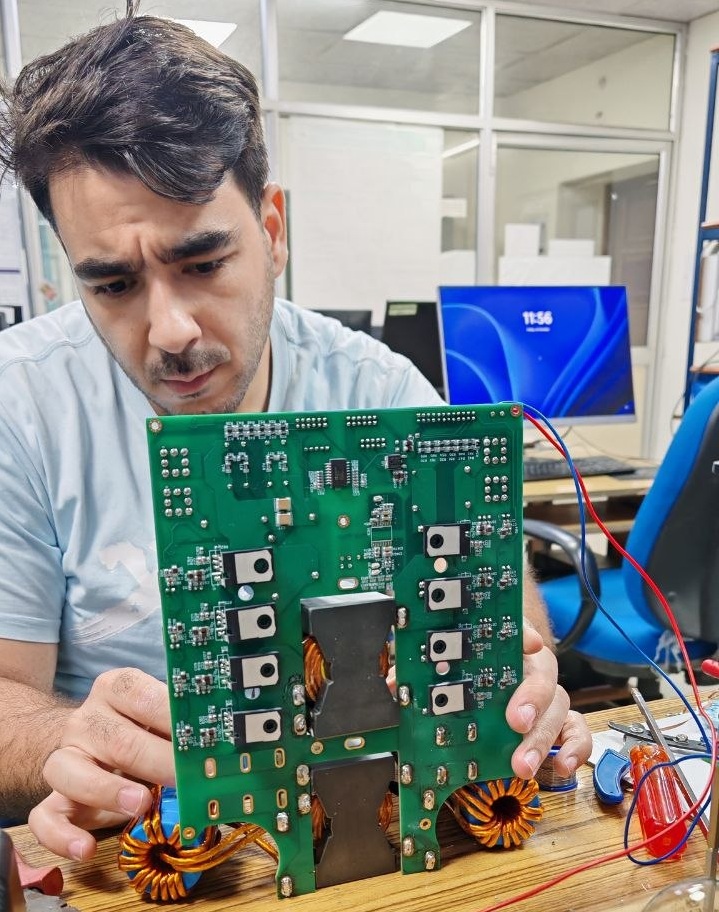
Ali H. Mahmoud is a PhD research scholar in Electrical Engineering at IIT Roorkee, working in the ADMIRE Lab under Prof. Narayana Prasad Padhy. His research sits at the intersection of power electronics hardware and real-time control: SiC-based inverter design, grid-forming and virtual synchronous generator control, FPGA- and DSP-level implementation, AI-based fault detection, and energy management for microgrids.
He builds what he studies. Alongside simulation and control theory, he designs and tests physical hardware — from 25 kVA modular SiC inverters and gate-driver boards to real-time monitoring systems for laboratory microgrids.
Before Roorkee, he earned his B.Sc. from Tishreen University, Syria, graduating first in his class with several national awards, and an M.Tech from Siksha 'O' Anusandhan University (CGPA 9.26/10). He has also run an independent electronics and computer repair practice since 2007.
His current focus is on making grid-forming converters faster, more observable, and more resilient — with the aim of continuing that work in industrial R&D.

Research Interests
My work bridges converter hardware and real-time control — designing the power stage, then implementing and validating the control that runs on it
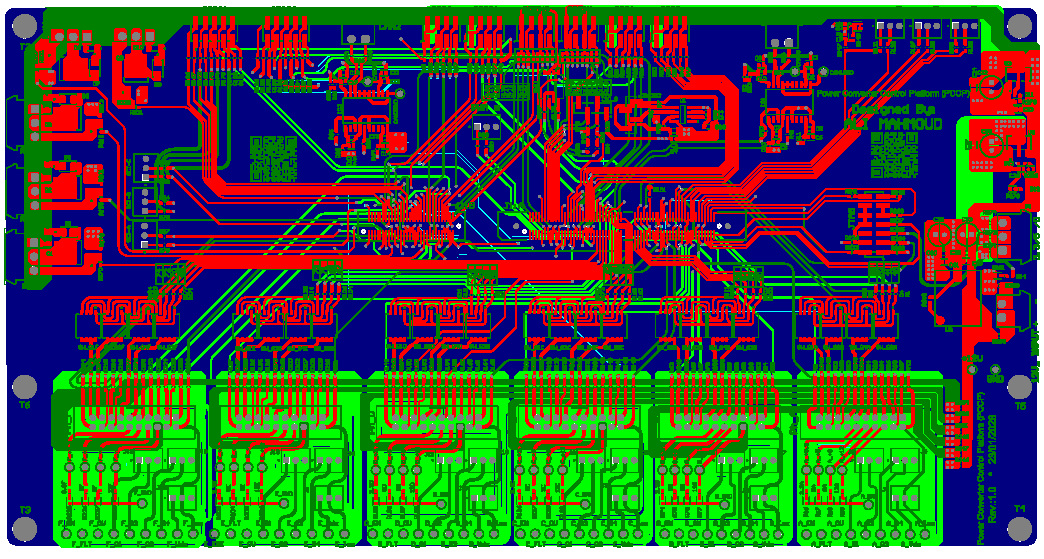
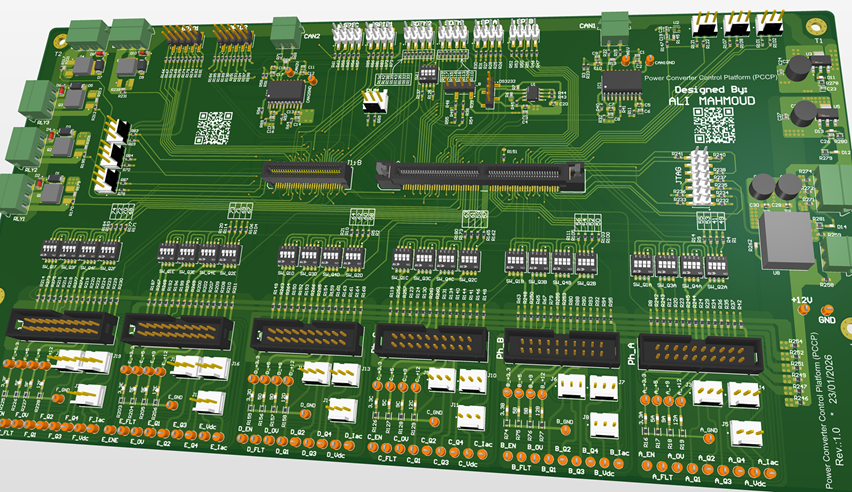
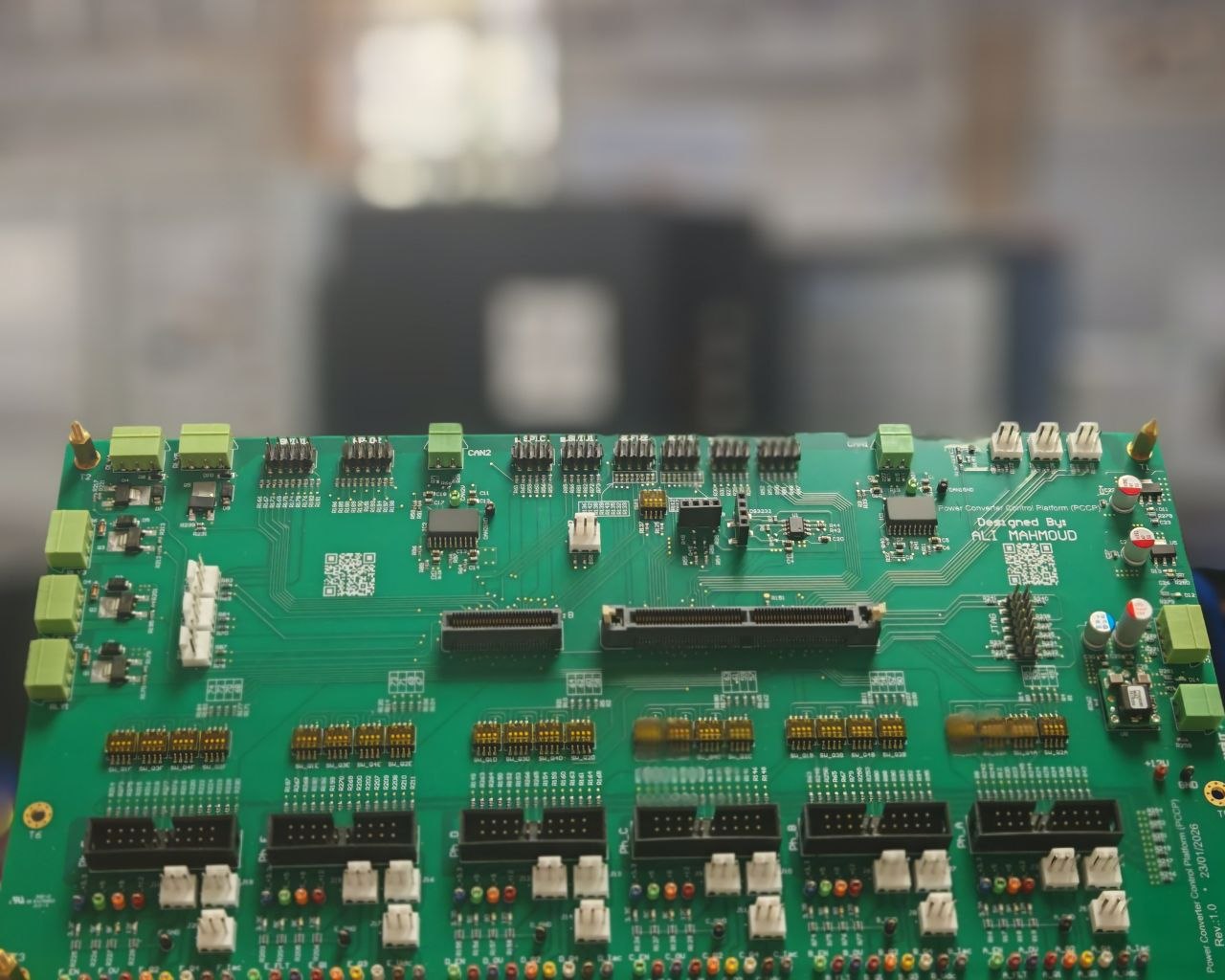
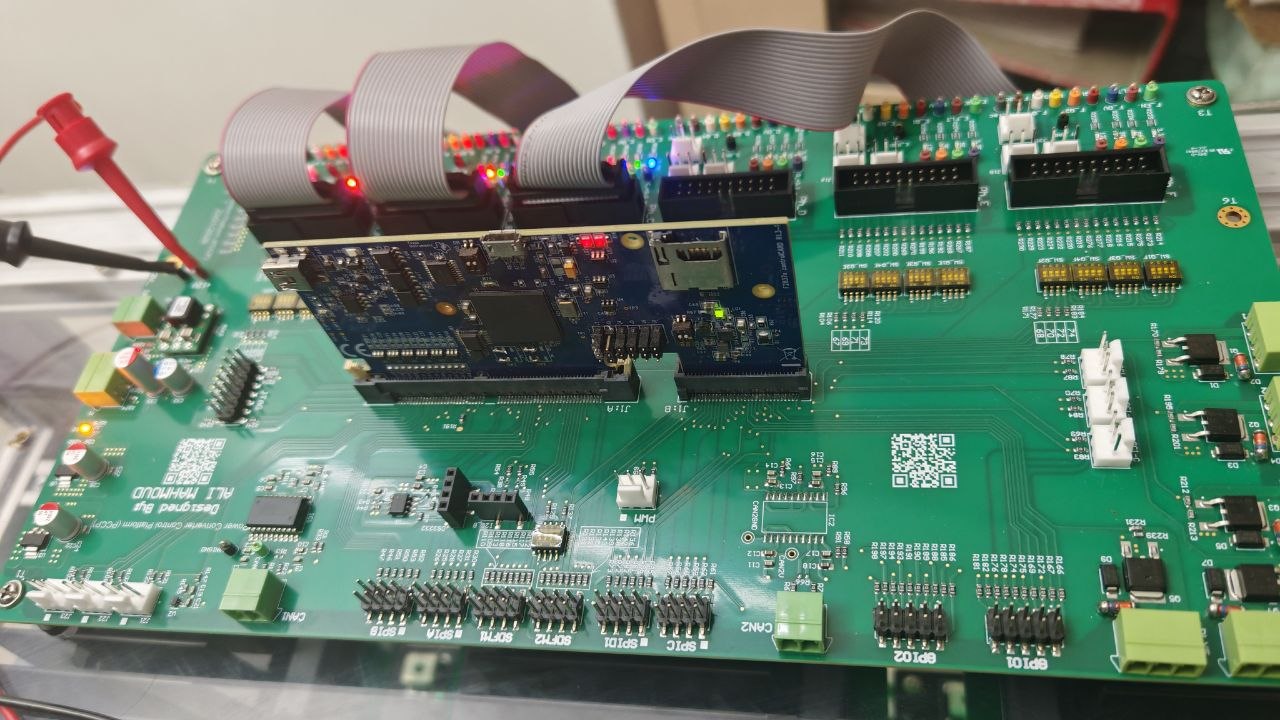
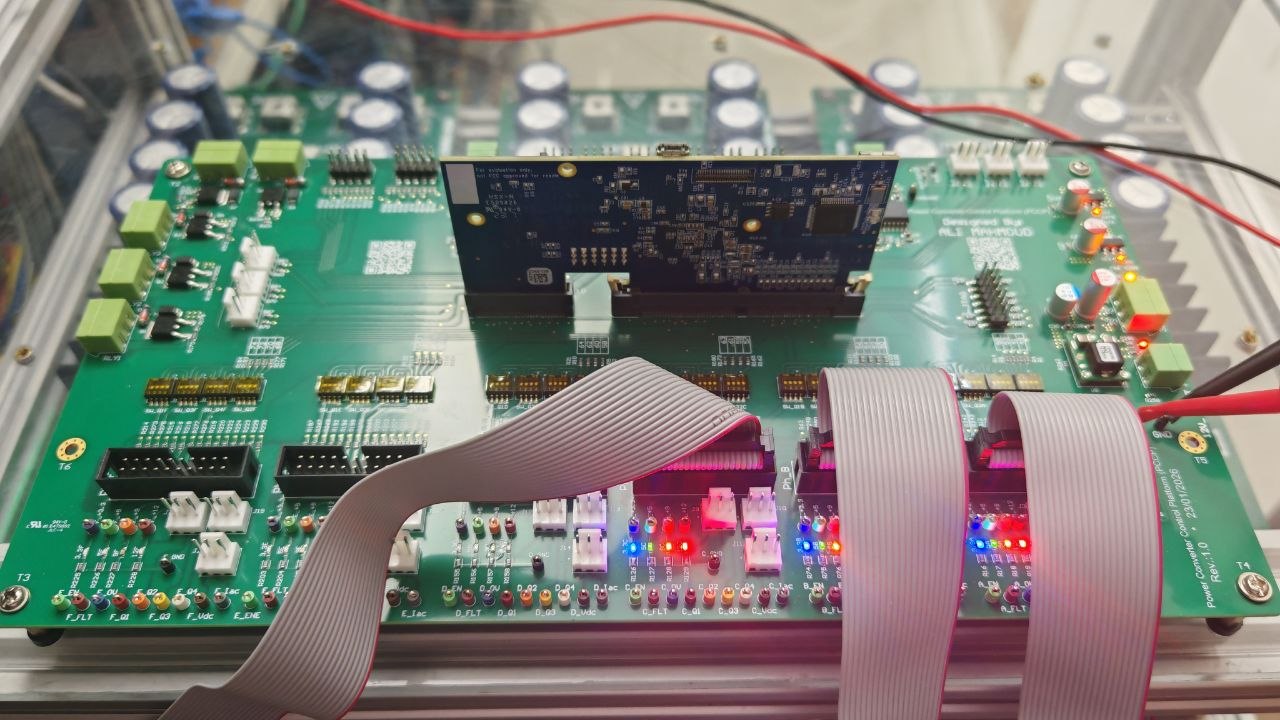
Most off-the-shelf DSP control boards force you to choose: either simple single-converter setups, or expensive proprietary systems that don't adapt to research needs. I wanted something in between — a platform that hosts a TI C2000 control card and cleanly interfaces with multiple power converter stages in parallel or interleaved configurations, so one controller can orchestrate an entire multi-converter system.
 What it provides:
 • 6 × 20-pin IDC interfaces for direct connection to converter boards, each with dedicated PWM, ADC, supply, and status (fault/ready) signals
• 2 × CAN ports, 4 × SPI, and GPIO expansion for FPGA integration
• 5 × relay driver outputs (12 V) for system-level control
• ADC/DAC interface ports, integrated 3.3 V supply rail, JTAG for debugging
• Designed around the TI C2000 control card (currently tested with TMS320F28379D),
• And more features related to isolation and noise mitigation.
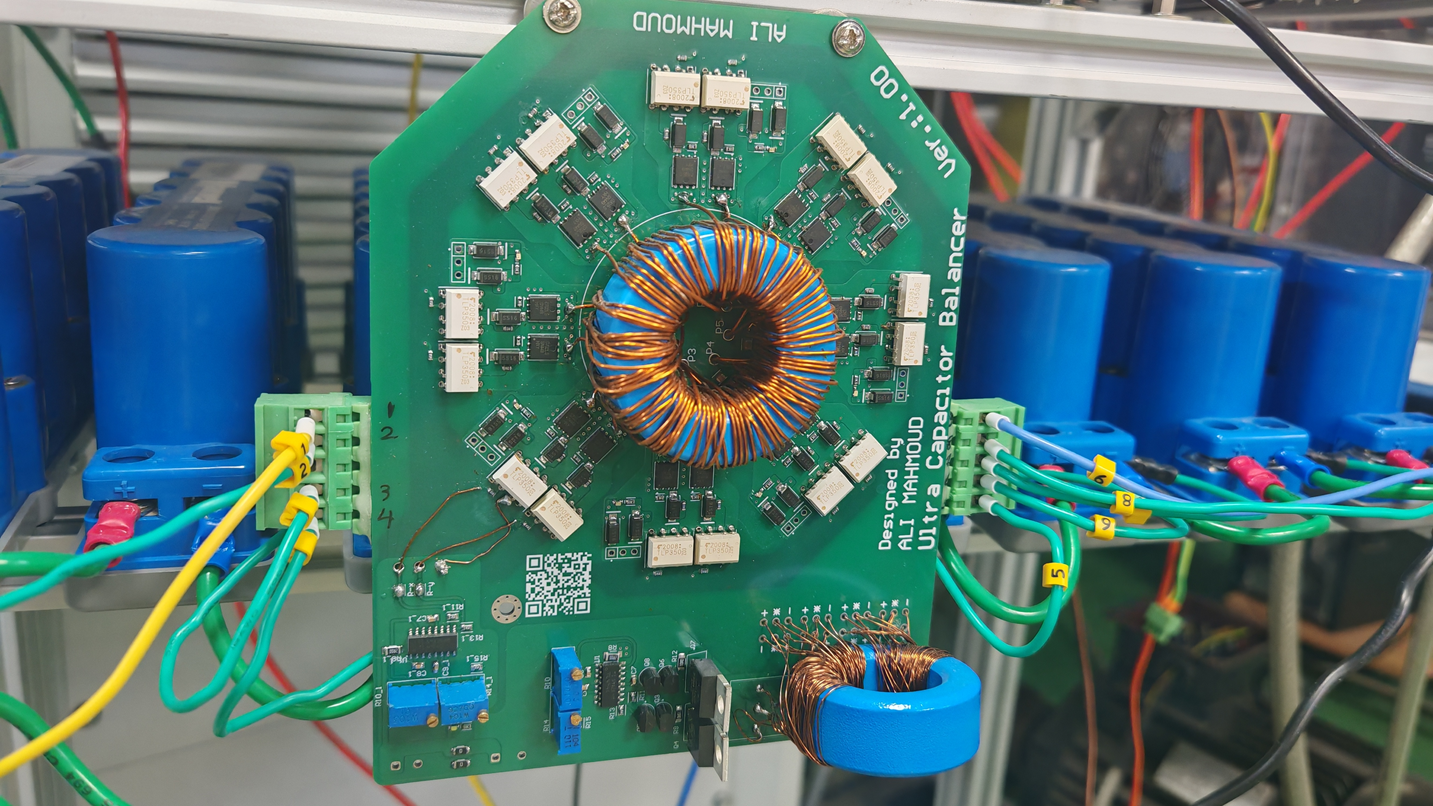
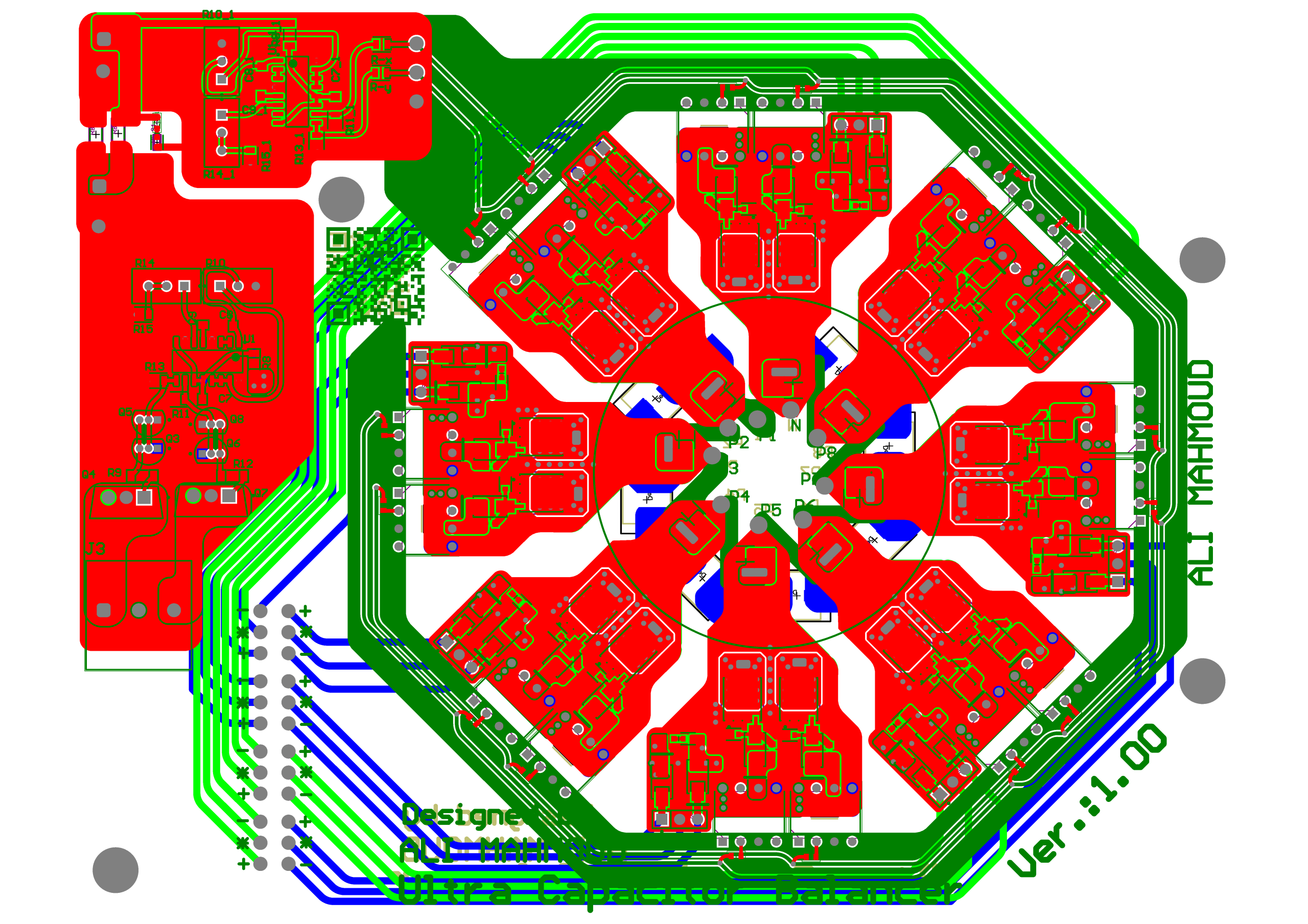
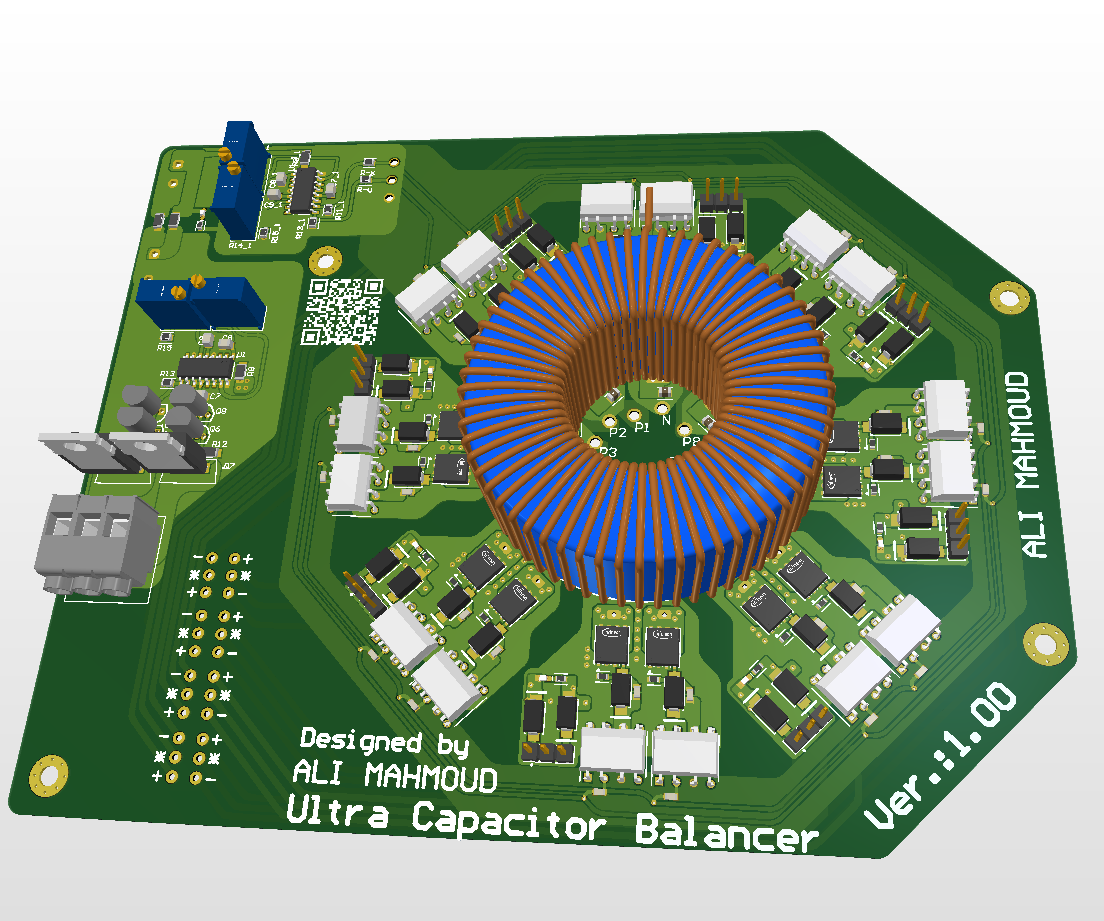
Recently designed and built an active balancing board for ultracapacitor stacks.
The topology uses eight flyback DC-DC converters sharing a single toroidal ferrite core. Each winding's mid-point connects to the module's positive terminal, while both winding ends return to the module's negative through low-Rds(on) MOSFETs — so energy flows from the strongest module to the weakest through the shared magnetic core rather than being dissipated as heat.
Specifications:
8 channels, up to 35 V per module.
~5 A balancing current.
Fixed switching frequency, duty cycle and enable on-board.
All three parameters can be driven externally by the host controller — e.g. the inverter managing the ultracapacitor system can enable balancing or adjust frequency/duty in real time
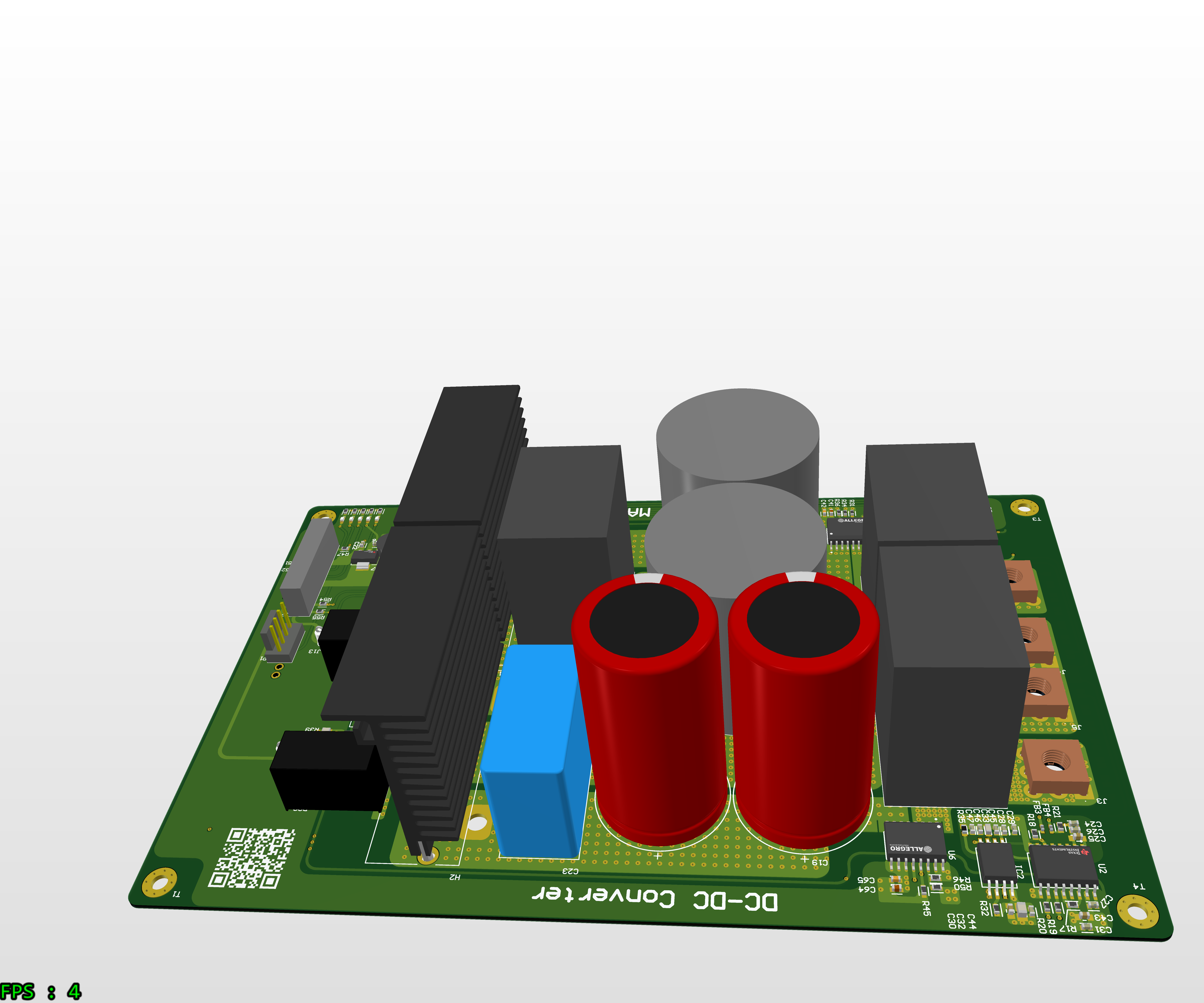
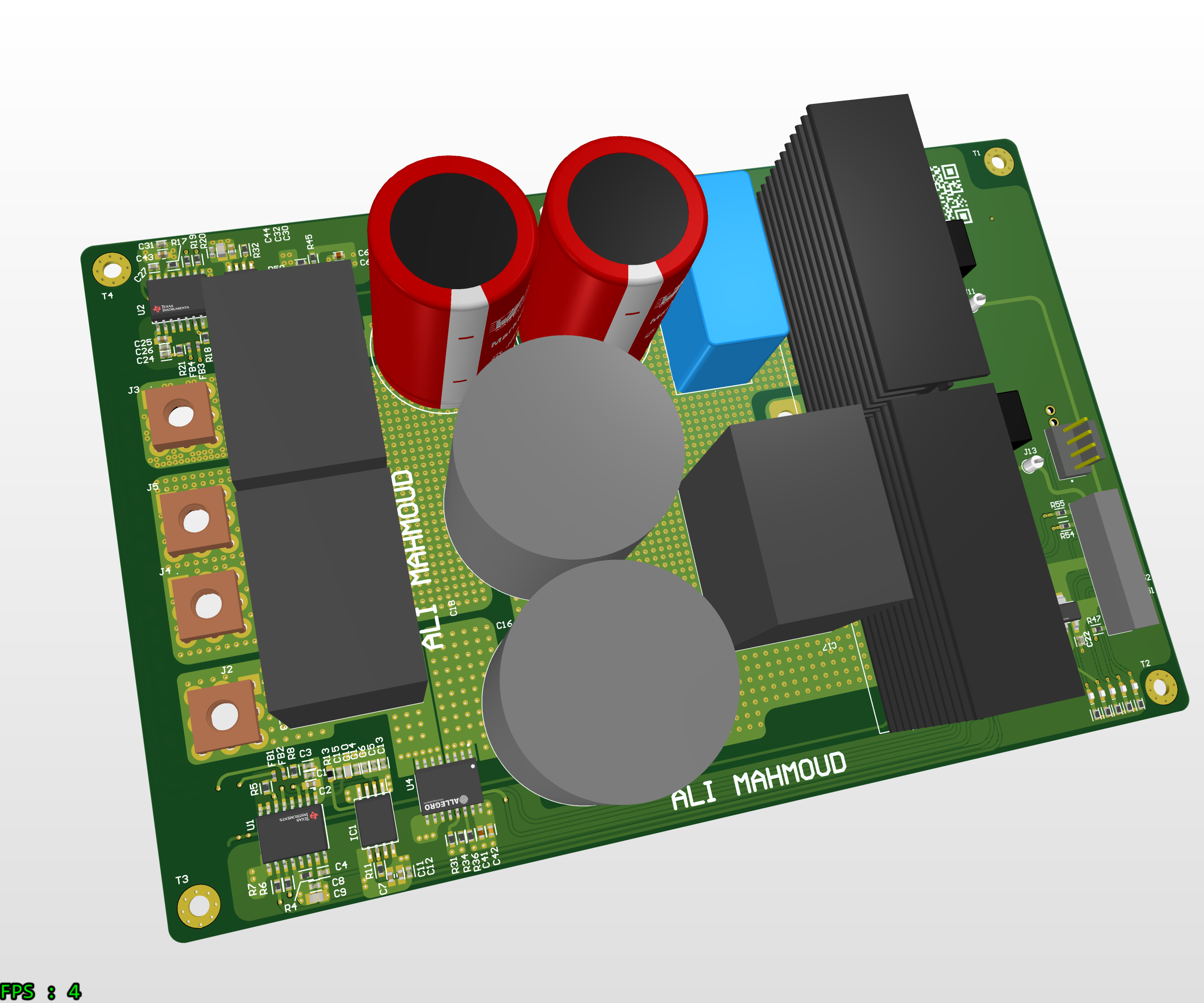
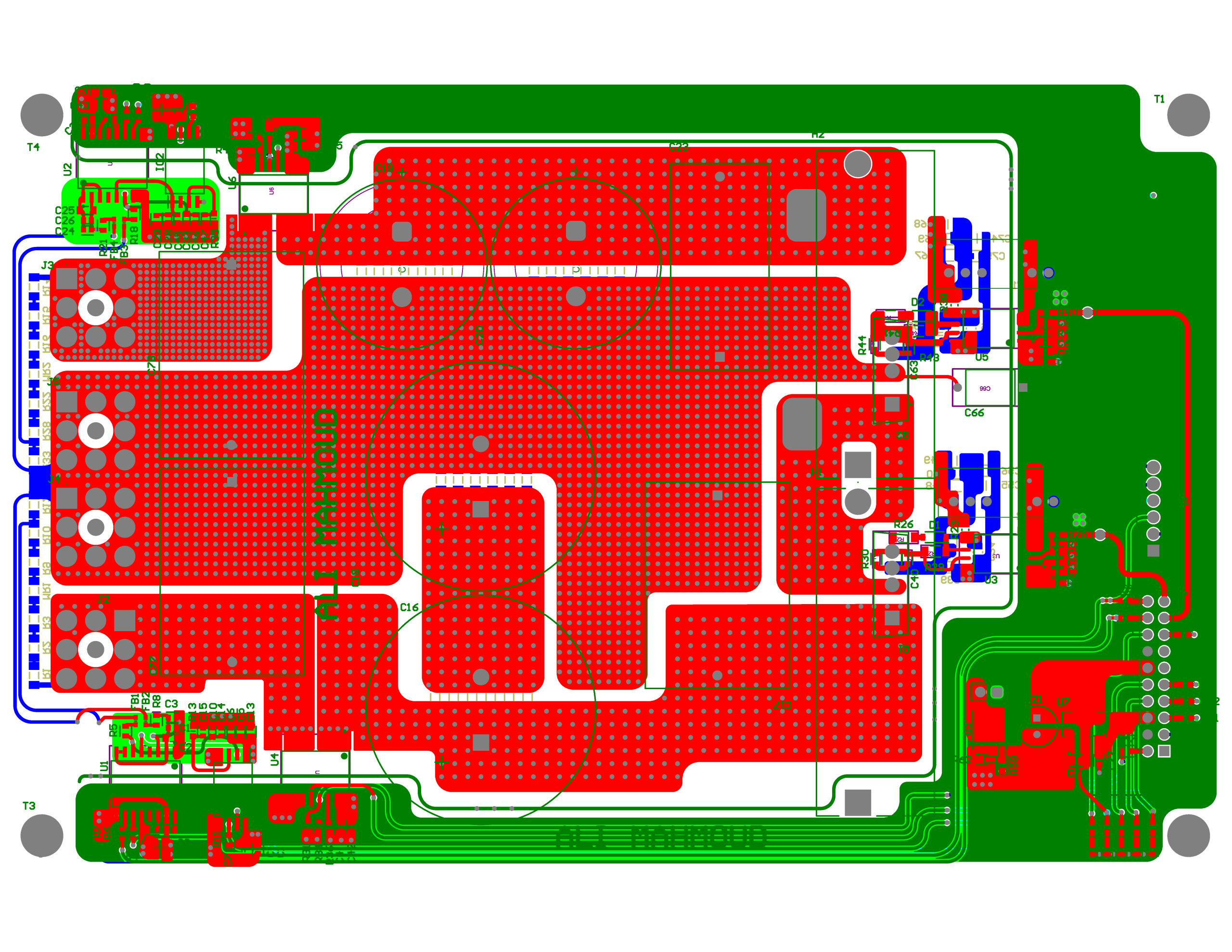
5 kW Bi-Directional DC–DC Converter
Designed a 5 kW bi-directional isolated DC–DC converter for DC microgrid, battery energy storage, and EV charging applications. This is the third generation of the design, featuring improved PCB layout, thermal management, and system integration.
Key Specifications
■ Input Voltage: 100–500 V DC
■ Output Voltage: 500–800 V DC
■ Peak Efficiency: Up to 97%
■ Fully bi-directional operation
Design Features